How to Choose a Vintage Dining Chair Set: Count, Fit and Condition
Compare chair count, seat height, room fit, materials and condition using four current Show Pony dining-chair sets.
A vintage dining-chair set has to solve several practical questions at once: how many seats you need, whether the chairs fit the table and room, what condition work may be required, and how the full set will reach the project. A photograph can establish the look, but the useful comparison begins with the listing's count, overall dimensions, seat height, materials and condition notes.
This guide uses four current Show Pony Palm Beach listings. Availability and listing details were checked on October 14, 2026. Examples may sell; use each product page for current availability, photographs, price and condition details. The measurements below are taken from the listings, and this article is not a separate physical inspection.
Confirm exactly what the set includes
Read the full title and description before comparing prices. A pair, a set of four and a set of six solve different rooms and are not interchangeable. Confirm whether every chair is shown, whether armchairs and side chairs are mixed, and whether the listed price covers the entire set.
For a client project, decide whether you need a fixed number of matching chairs or can use a smaller set with complementary host chairs. If the room regularly needs six seats, a set of four is not automatically the less expensive solution once you account for finding and coordinating two additional chairs.
Compare the chair to the table—not just the room
Measure the table from the floor to the underside and note any apron, stretcher or pedestal that affects knee and leg space. Then compare that measurement with the listed seat height. Also check the chair's overall width and depth against the usable length around the table, nearby walls and the path people use to pull a chair out.
Mark one chair's footprint on the floor with removable tape, then repeat it for the number of chairs you intend to use. This simple layout test makes it easier to see whether a wide armchair, flared leg or curved back will crowd the next seat or a doorway.
Four current sets with different planning questions
A set of four with a restoration choice
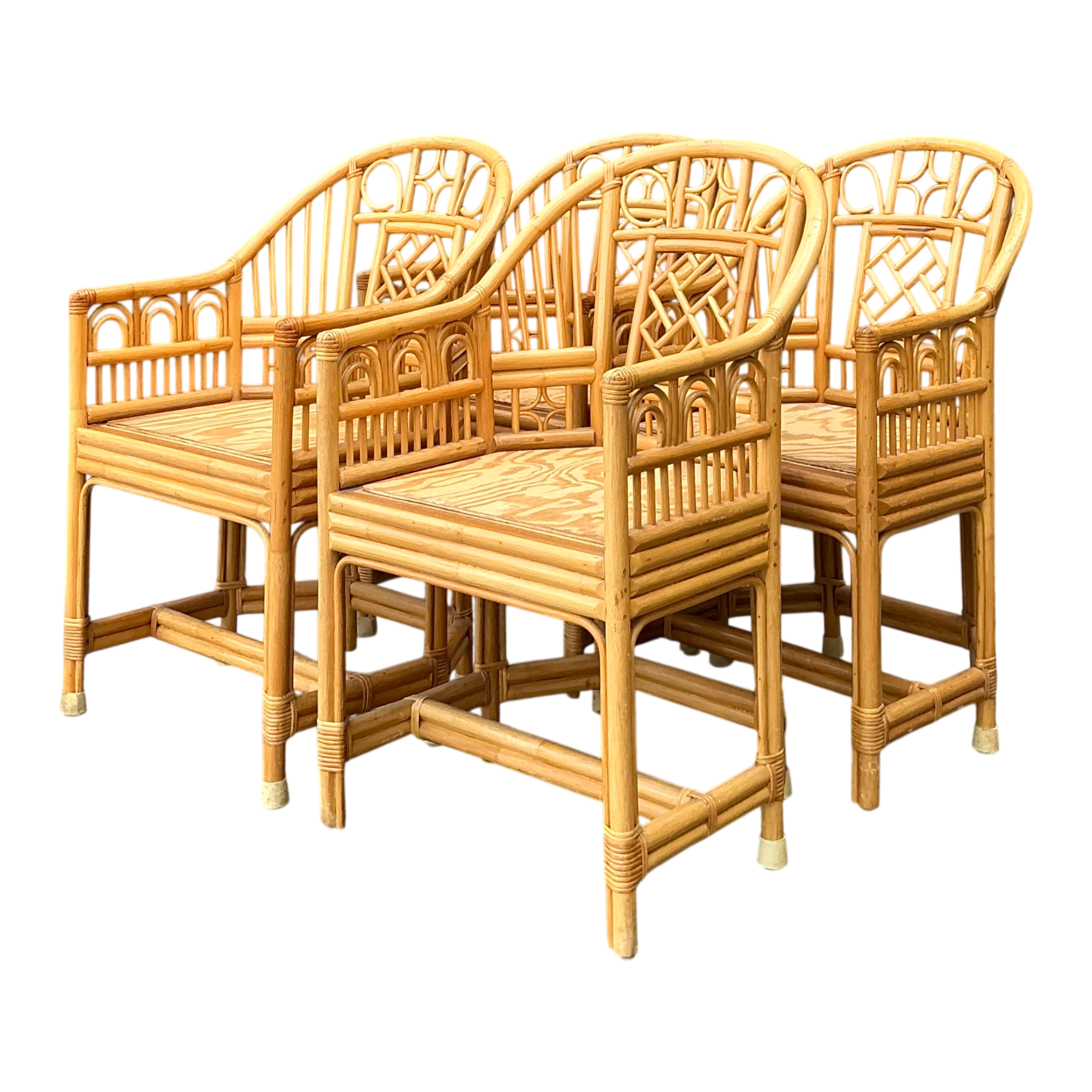
The Vintage Brighton Pavilion Rattan Dining Chairs — Set of 4 is listed at 22 inches wide, 17 inches deep and 36.25 inches high, with an 18-inch seat height. The listing rates the set Very Good and notes that the original cane seats were replaced with wood panels. That gives a buyer a clear decision to make before ordering: use the wood panels with cushions, or discuss whether restoring cane seats is appropriate for the project.
A set of five mixing woven texture and metal
The Vintage Woven Rush and Metal Dining Chairs — Set of 5 is listed at 20.25 inches wide, 16 inches deep and 30.75 inches high, with an 18.25-inch seat height. The materials are recorded as rattan and iron, and the condition is listed as Very Good. For this type of set, review close photographs of the woven seats and backrests as well as the metal joints and finish.
A set of six with the tallest listed seat height
The Vintage Rattan Dining Chairs — Set of 6 is listed at 18 inches wide, 13 inches deep and 34.5 inches high, with a 19-inch seat height. It is listed in Very Good condition. Compare that seat height with the exact underside of your table rather than assuming every dining chair will provide the same clearance.
A sculptural set that calls for upholstery planning
The Vintage Sculptural Wood Dining Chairs — Set of Six is listed at 20.5 inches wide, 17.75 inches deep and 37.75 inches high, with an 18.5-inch seat height. The condition is listed as Good, and the description notes visible wear and recommends reupholstering the seats. For a design project, treat upholstery fabric, labor, timing and delivery as part of the decision rather than an afterthought.
Read condition by material
Different materials call for different questions. On rattan, cane or rush seating, inspect breaks, loose wrapping, sagging and past repairs. On wood chairs, look at joints, feet, finish wear and any evidence of refinishing. On metal frames, review oxidation, paint loss and welds. For upholstery, ask about stains, fading, odor, cushion support and whether fabric replacement is expected.
A general condition grade is a useful summary, but it cannot replace photographs and specific notes. If a concern is not clear in the listing, request close-up images before purchasing. Do not infer maker, date or provenance from style alone; rely on the individual listing's documented attribution.
Plan delivery for the whole set
Measure doorways, halls, stair turns, elevators and loading access for the destination. Confirm whether chairs stack or nest rather than assuming they do, and ask how the set will be protected in transit. For a designer installation, share the destination, access notes and project timeline before ordering.
Review the current shipping information and returns policy; this guide does not change either policy. Browse the current seating collection, visit the interior designer sourcing page, or use our broader online vintage furniture buying checklist for additional planning questions.
By Show Pony Palm Beach