Buying Vintage Furniture Online: Measurements, Condition and Delivery
A practical checklist for decorators and home buyers choosing one-of-a-kind furniture remotely—from room fit and condition photos to delivery access.
Buying a one-of-a-kind piece online asks a little more of you than choosing a new chair from a showroom sample. You are choosing a particular object, with its own dimensions, finish and signs of use. A clear brief and a few extra questions make it easier to decide whether that object belongs in your room.
This checklist works for a decorator furnishing a client's home and for someone buying a single piece for themselves. Start with the room, then evaluate the listing, then plan the delivery.
1. Measure the space the piece will actually occupy
Write down width, depth and height separately. Mark the footprint on the floor with painter's tape, and check how it relates to nearby seating, doors and walking routes. A side table can fit into a gap yet still be awkward beside a low sofa; a chair can fit under a table visually while its arms prevent it from sliding in.
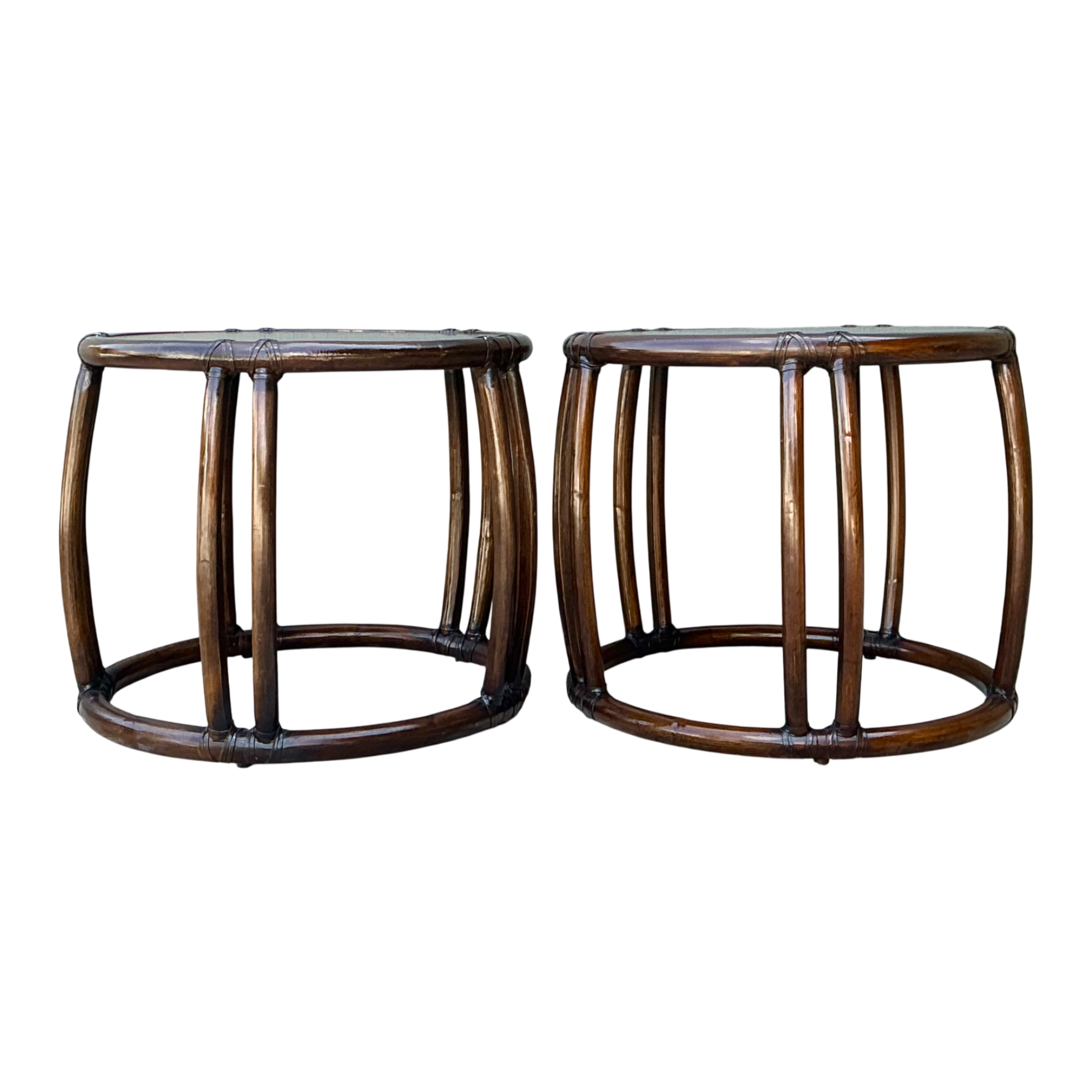
For example, the listing for our McGuire rattan drum side tables records a diameter of 25.25 inches and a height of 20.25 inches. The circular footprint matters just as much as the height. Use those measurements to test your layout rather than estimating scale from a photograph.
- For seating, request seat height, usable seat depth and arm height when those details matter to the room.
- For storage, allow space for doors and drawers to open.
- For tables, check leg placement and clearance as well as the overall top dimensions.
- Confirm whether the stated dimensions include a frame, cushion, shade or other removable part.
2. Ask for photographs that answer a specific question
A clean front view helps you understand the silhouette. It does not replace close-ups of corners, joints, upholstery, glass edges or the underside. Ask for the view you need: the back of a cabinet that will stand away from a wall, the top of a table under ordinary light, or the maker's label when attribution matters.
Read the condition notes beside the photos. A listing's general condition label is a starting point, not a substitute for understanding a particular mark, repair or replacement. If the description and a photograph appear inconsistent, ask us to clarify before ordering. For color-sensitive projects, also remember that screen settings and lighting can change how a finish appears.
3. Separate style, attribution and restoration
“By,” “attributed to,” “after” and “in the style of” are not interchangeable descriptions. Use the wording recorded on the individual listing, and ask what documentation or labeling supports it. Do not assume that every piece resembling a familiar designer's work was made by that designer.
Likewise, a refinished surface or replacement cushion may be entirely appropriate for your project, but it should be a conscious choice. Ask about any restoration relevant to your decision, including what is known and what is not documented.
4. Plan the route into the room
Measure doorways, hallways, stair turns and elevator openings—not only the final destination. Tell us about stairs, building delivery rules, restricted hours or an elevator reservation before arranging transport. Ask whether removable parts can be separated for delivery; do not assume a large piece can be dismantled.
Shipping is separate from the listed item price. Enter your ZIP code in the product page's delivery options where available, and contact us if the item or destination needs a custom arrangement. Review our current shipping information and returns policy before purchasing.
5. Keep a short project record
Save the product link, measurements, condition questions and delivery requirements together. For a client project, confirm the selection and any proposed restoration before placing the order. Inventory changes: a piece shown in a Journal example may later sell, and a saved link does not reserve it.
Explore our current collection, browse McGuire furniture, or contact the West Palm Beach showroom for additional details. The goal is not to remove the character of vintage furniture from the decision—it is to understand that character before the piece arrives.
Build your project shortlist
Browse our style collections, including Brutalist furniture, lighting and decor. For client projects, visit our interior designer page for contact details and the information to include in your inquiry.
By Show Pony Palm Beach