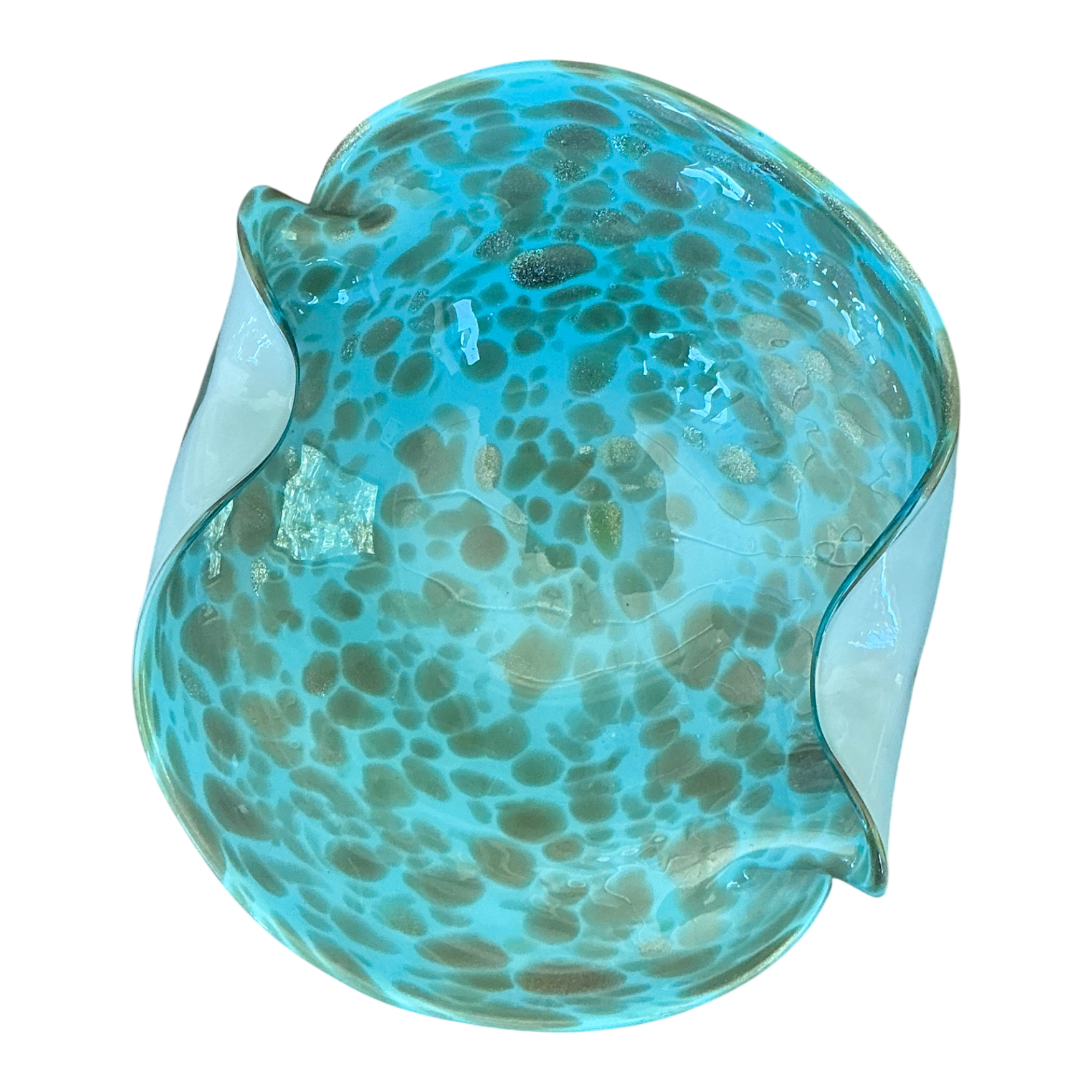
Choosing Vintage Murano and Murano-Style Glass for Your Home
A practical guide to comparing vintage Murano and Murano-style glass by attribution, scale, light and condition, using current Show Pony examples.
Inventory examples and availability checked September 30, 2026. Product pages remain the source for current price, condition and availability.
Vintage Italian glass can work as a small color accent or as the focal point of a tabletop, but scale and attribution matter more than a broad style label. This guide uses three current Show Pony examples to show how to compare size, wording and condition before choosing a piece.
1. Read the attribution exactly as written
Product titles may describe a piece as Murano, Italian Murano or “after Murano.” Those phrases are not interchangeable. Treat the exact wording on the listing as the recorded attribution, and do not turn a style reference into a maker claim. If a named maker, signature or label is important to your decision, ask for a clear photograph and written confirmation before purchasing.
2. Compare the footprint, not just the height
A glass object has to fit both the surface and the visual space around it. Measure the usable top of a console, coffee table or shelf, then leave enough clearance for nearby lamps, books and daily use. The three pieces below show how differently similarly titled bowls can read in a room.
- Vintage Italian Murano Glass Bowl: 9 inches wide, 1 inch deep and 11 inches high. Its taller profile suits a console, pedestal or open shelf where the silhouette has room to register.
- Vintage Italian Murano Glass Bowl: 7 inches wide, 1 inch deep and 8 inches high. The smaller footprint can work in a layered arrangement without taking over the surface.
- Vintage Gold Flecked Glass Bowl After Murano: 5.75 inches wide and deep by 4.75 inches high. The lower, rounder form is suited to a compact tabletop or a grouping of objects.
3. Use light deliberately
Transparent, translucent and reflective glass changes with its surroundings. Before deciding on placement, consider both daylight and evening lighting. A window can reveal color variation, while a shaded shelf may emphasize shape instead. Avoid assuming that a studio photograph predicts every room; use the listing images to compare the piece against light and dark backgrounds.
4. Review condition one photograph at a time
For vintage glass, enlarge the available photographs and check the rim, base, edges and broad polished surfaces. Look for disclosed scratches, chips, cracks, repairs and age-related wear. The three examples above were listed in Very Good condition when checked, but the individual product pages contain the current descriptions and photographs. Ask for another image if a detail is not visible enough for your decision.
5. Plan the room and delivery together
Small objects are easier to place than furniture, but they still need a safe arrival path and a stable display surface. Confirm dimensions, decide where the piece will sit and review the store’s current shipping information and returns policy before ordering. For a larger project, save product links in the room plan so the glass, furniture and lighting can be considered as one composition.
A simple selection rule
Choose the attribution you are comfortable with, the dimensions your surface can support and the color that works in both daylight and evening light. Then use condition photographs—not a generic style label—to make the final comparison. Browse the current decor collection for additional glass and decorative objects; one-of-a-kind inventory changes as pieces arrive and sell.
By Show Pony Palm Beach